Syrup safety for children: how to check cough syrups and suspensions in Pakistan
To check a child's syrup in Pakistan, buy only a DRAP-registered product from a licensed pharmacy, make sure the seal is intact, read the batch and expiry, scan the 2D code on newer packs and search the batch in DRAP's recall alerts. Liquid medicines need extra care because a contaminated ingredient cannot be seen, and children are the most vulnerable.
Why syrups need special attention
A syrup is mostly solvent: water plus ingredients such as propylene glycol, glycerin or sorbitol that dissolve the medicine and make it pleasant to take. Since 2022 the World Health Organization has issued several global alerts after children in a number of countries died from kidney failure linked to syrups contaminated with diethylene glycol (DEG) or ethylene glycol (EG). These are cheap industrial chemicals that can be passed off as, or mixed into, pharmaceutical-grade solvents.
Pakistan's regulator has acted on the same risk. DRAP has issued 11 rapid alerts in our index between 2024 and 2025 about contaminated or falsified propylene glycol and glycerin batches in the supply chain, telling manufacturers not to use the named batches. Separately, 73 DRAP alerts in our index mention a syrup or suspension among the affected products, for reasons ranging from failed testing to falsified copies and faulty seals.
Recent DRAP alerts about syrup solvents
- Rapid Alert: CONTAMINATED PROPYLENE GLYCOL (BATCH # YFO1210911) PURPOTEDLY MANUFACTURED BY M/S. DONGYING HI-TECH SPRING CHEMICAL INDUSTRY CO LTD, CHINA. (Mar 2025)
- Rapid Alert: CONTAMINATED PROPYLENE GLYCOL (BATCH # A803S96G46) PURPOTEDLY MANUFACTURED BY M/S. DOW CHEMICAL PACIFIC (SINGAPORE) PRIVATE LIMITED. (Feb 2025)
- Rapid Alert: Contaminated Propylene Glycol (Batch # YF01210911) Allegedly Manufactured by M/S. Dongying Hi-Tech Spring Chemical Industry Co. Ltd., China. (Dec 2024)
- Rapid Alert: Contaminated Propylene Glycol (Batch# YF01230522) (Oct 2024)
- Rapid Alert: Falsified Propylene Glycol in Supply Chain Market (Aug 2024)
- Rapid Alert: Contaminated Propylene Glycol Identified and Confiscated (Mar 2024)
- Rapid Alert: Substandard Propylene Glycol (Batch # G01821UG) claimed to be manufactured by SK Picoglobal Korea. (Mar 2024)
- Rapid Alert: Contaminated Propylene Glycol Identified and Confiscated (Mar 2024)
These alerts are aimed at manufacturers, who must test every batch of solvent. As a parent you cannot test for DEG at home, which is why buying registered products from licensed sellers and checking batches against alerts matters so much.
How to check a syrup before you give it
- Registered productThe carton shows a DRAP registration number, the maker's name and address, and the generic name and strength (for example "per 5 ml").
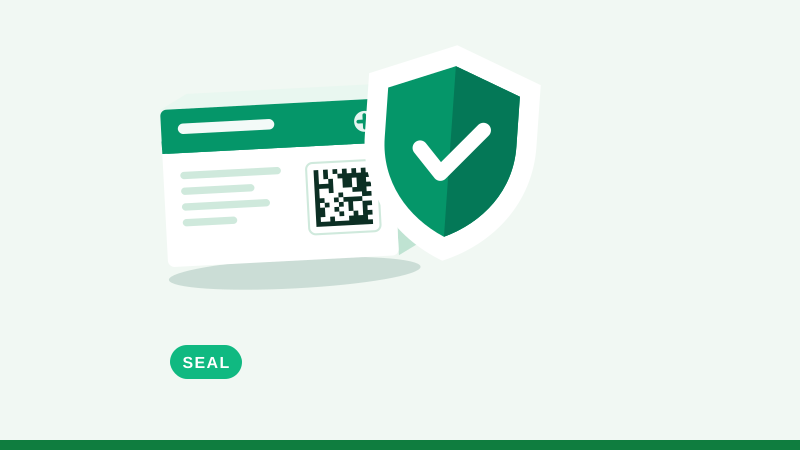
- Seal intactThe cap's ring or the induction seal under it should be unbroken. DRAP has recalled suspensions over faulty induction seals.
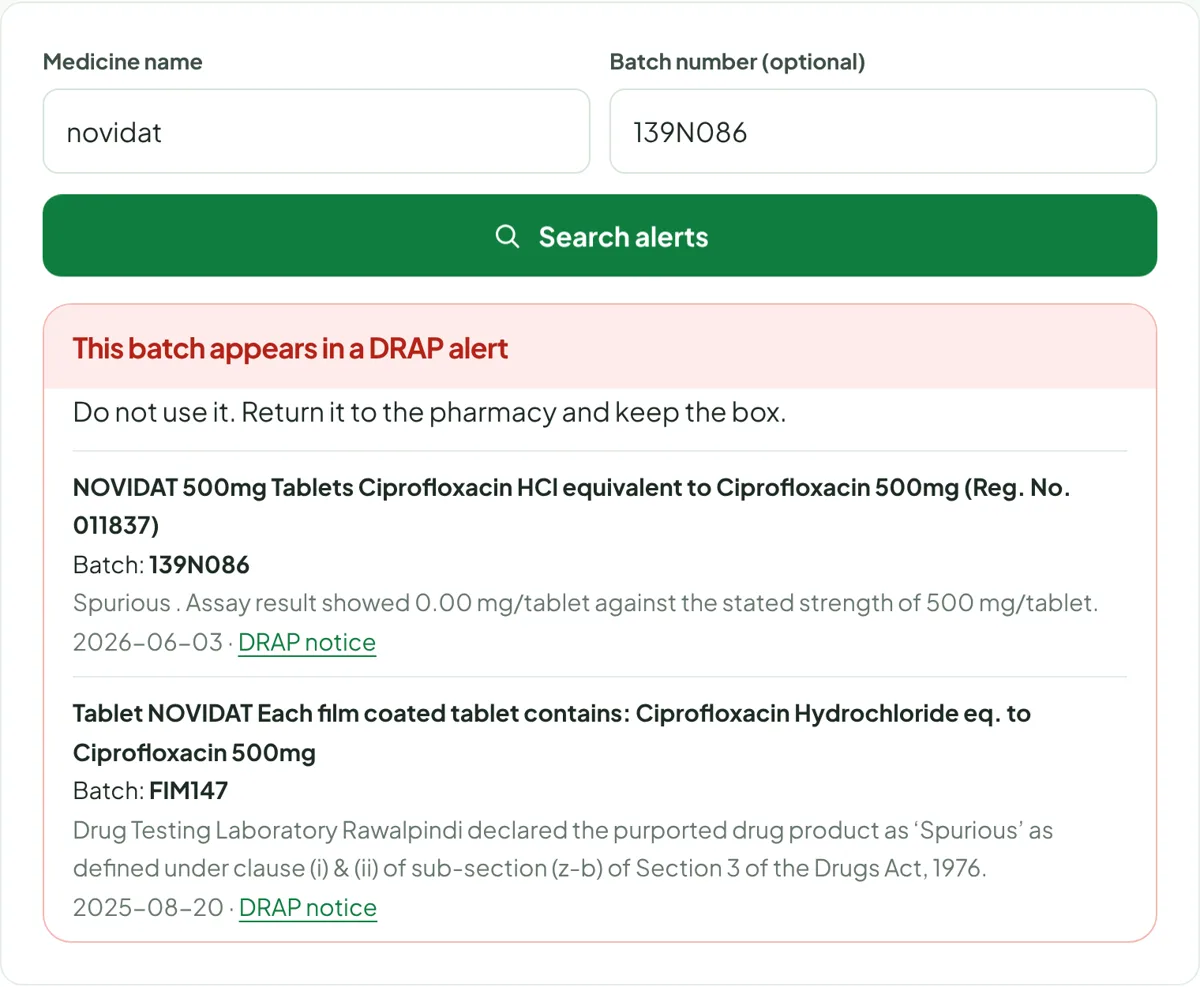
- Batch and expiryPrinted clearly on the bottle and carton, and matching. Search the batch in DRAP recall alerts.
- The 2D codeOn packs made from 9 October 2026, scan the code. Older stock may not have one; see medicine without barcode.
- Look at the liquidCompare with what you know: unusual colour, cloudiness in a clear syrup, lumps that do not shake out, or a strange smell are reasons to stop.
Suspensions and dry powders
Many antibiotics for children come as a dry powder that the pharmacist or parent mixes with water. Use clean, boiled and cooled water up to the line on the bottle, shake well before each dose, and note the date you mixed it. Most reconstituted antibiotic suspensions last only one or two weeks, some only in the fridge; the label tells you exactly how long. Throw away what is left after that, even if the bottle's printed expiry is years away.
Measuring the dose
Kitchen spoons vary a lot in size. Use the measuring cup, spoon or oral syringe that comes with the medicine, and give the dose your doctor or pharmacist told you for your child's age or weight. Never give an adult medicine to a child in a smaller amount unless a doctor advised it. Keep all medicines out of reach; a sweet syrup is exactly what a small child will drink if they find it.
Warning signs after a dose
Contamination with DEG or EG typically causes vomiting, diarrhoea, stomach pain, passing little or no urine, drowsiness or confusion in the days after taking the medicine. These signs need urgent medical care. Take the bottle and carton with you to the hospital so doctors can see the product and batch. Any unexpected reaction can also be reported to DRAP; see how to report side effects.
What to do with a suspect bottle
- Stop using it and keep it with the carton and receipt.
- Do not pour it away; it is evidence.
- Report it to DRAP on the helpline 0800-03727 or the complaint portal; see how to report a fake.
- Tell the pharmacy so they can check the rest of their stock.
Common mistakes with children's syrups
- Giving two products that contain the same ingredient, such as two different fever syrups that both contain paracetamol.
- Using an old, opened bottle from a previous illness.
- Buying "cough and cold" mixtures for very young children without advice.
Mukhtasar
Bachon ki dawa sirf licensed pharmacy se lein. Seal, batch aur expiry dekhein, naye packs ka code scan karein aur batch recall alerts mein dhoondein. Naap ke liye saath diya gaya cup ya syringe istemal karein. Dawa ke baad ulti, peshab kam aana ya gunoodgi ho to foran hospital jayein aur botal saath le jayein.
Questions people ask
How do I know if a cough syrup is safe for my child?
Buy only a DRAP-registered syrup from a licensed pharmacy, check the seal, batch and expiry, scan the code on packs made from 9 October 2026, and search the batch in DRAP recall alerts. Give children only medicines a doctor or pharmacist has advised for their age.
What is diethylene glycol contamination?
Diethylene glycol (DEG) and ethylene glycol (EG) are toxic industrial chemicals. When a syrup maker uses a falsified or contaminated batch of propylene glycol or glycerin as a solvent, the finished syrup can contain them and cause kidney failure, especially in children.
Has DRAP warned about contaminated syrup ingredients?
Yes. Our index holds 11 DRAP rapid alerts from 2024 to 2025 about contaminated or falsified propylene glycol or glycerin, the solvents used in syrups, naming batches that should not be used by manufacturers.
Bachon ka syrup asli hai ya nahi kaise pata karein?
Licensed pharmacy se lein, seal, batch aur expiry dekhein, naye packs par code scan karein aur batch number recall alerts mein dhoondein. Rang, gaarhapan ya boo mein farq ho to istemal na karein.