How to store medicine in Pakistan's hot weather
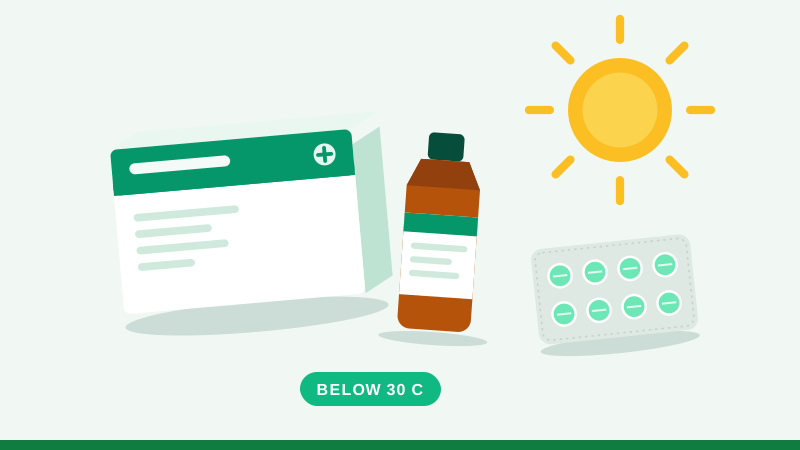
Keep medicines in a cool, dry, dark place below the temperature printed on the label, usually 25 or 30 °C, and away from kitchens, bathrooms, windows and cars. A genuine medicine that has been cooked in the heat can fail just like a substandard one, well before its expiry date.
Why heat matters
An expiry date is a promise that only holds under the storage conditions on the label. Heat speeds up the chemical breakdown of active ingredients, and humidity lets tablets absorb water, swell and crumble. Summer temperatures across much of Pakistan run well above 40 °C, and rooms without cooling can stay above 30 °C for weeks.
What the label words mean
| Label says | Meaning | At home |
|---|---|---|
| Store below 25 °C | Sensitive to warmth | Coolest room in the house; consider an air-conditioned room in summer |
| Store below 30 °C | Normal room storage | A shaded cupboard away from outside walls |
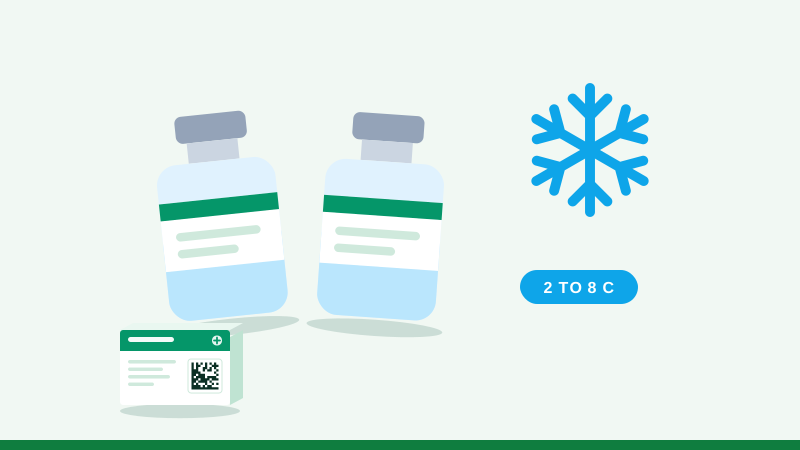
| Store at 2 to 8 °C | Refrigerate | Middle shelf of the fridge, never the freezer or the door |
| Do not freeze | Freezing destroys it | Keep away from the freezer compartment and ice packs |
| Protect from light | Light breaks it down | Keep it in its original carton |
| Protect from moisture | Absorbs water | Keep the cap tight and leave the small drying sachet in the bottle |
The worst places to keep medicine
- The kitchen: heat and steam from cooking.
- The bathroom: humidity from showers.
- A window sill or the top of the fridge: direct sun and warm air.
- A car or motorbike compartment: the hottest place of all.
- A handbag left in the sun.
Medicines that need extra care
- Insulin and other injections kept in the fridge. See our insulin storage guide.
- Antibiotic suspensions for children: once mixed with water many need the fridge and expire in 7 to 14 days.
- Suppositories, creams and ointments: they melt or separate.
- Soft gelatin capsules: they stick together.
- Inhalers: pressurised canisters must not be left in the sun.
- ORS sachets: keep dry; a sachet that has turned hard or damp should be thrown away.
Buying in summer
Storage starts before the medicine reaches you. Prefer pharmacies that are shaded and cooled, and where fridge items are handed to you from a fridge. Avoid medicine displayed in direct sun on a counter or stall. Go straight home with temperature-sensitive items, and scan the pack as usual: a verified pack tells you it is genuine, though not how it was stored.
During load-shedding and heatwaves
Long power cuts in summer turn rooms into ovens and fridges into warm boxes. A few habits help:
- Choose the coolest, shadiest room for your medicine box, ideally on the ground floor and away from the roof and west-facing walls.
- Keep fridge medicines in the main body of the fridge and keep the door shut during an outage. A closed fridge stays cold for hours.
- For long outages, an insulated box with cool packs wrapped in cloth protects fridge medicines. Never let them touch ice.
- Do not store medicine on top of a UPS, inverter or fridge, which give off heat.
Travelling with medicine
- Carry it with youKeep medicine in hand luggage, not the car boot, the roof rack or bus luggage hold.
- Use an insulated pouchEspecially in summer and for insulin, eye drops and suppositories.
- Keep original packsThey carry the name, strength, batch and expiry, and are useful at airports and checkpoints.
- Take enoughPlus a few days extra in case of delays, so you do not have to buy from an unfamiliar seller on the way.
Humidity during the monsoon
Heat is not the only enemy. In the humid months, tablets absorb moisture, effervescent tablets fizz in the tube, capsules soften and powders cake. Keep caps tight, leave the drying sachet in the bottle, keep strips in their carton, and do not move tablets into pill boxes for weeks ahead. If ORS sachets or powders have turned hard, throw them away.
Is my medicine still good? A quick check
| Form | Signs of heat or moisture damage |
|---|---|
| Tablets | Spots, colour change, swelling, crumbling, sticking to the foil |
| Capsules | Soft, sticky, cracked, clumped together |
| Syrups | Separation, crystals, colour change, unusual smell |
| Creams and ointments | Oil separating, grainy texture, change of smell |
| Suppositories | Melted and reshaped |
| Insulin | Clumps, crystals, cloudiness in a clear insulin |
| Eye drops | Cloudiness or particles |
If in doubt, ask a pharmacist and replace it. For the date itself, see how to read expiry dates.
Garmi mein dawa kaise rakhein
Dawa ko thandi, khushk aur andheri jagah rakhein, kitchen aur bathroom se door. Gaari mein dawa na chhorein. Fridge wali dawa (jaise insulin) ko 2 se 8 darje par rakhein aur kabhi jamne na dein. Rang, khushbu ya shakal badal jaye to dawa istemal na karein.
A home medicine box that works
Use one sturdy box with a lid, kept in the coolest cupboard and out of children's reach. Keep each medicine in its original carton with the leaflet, so you always have the name, strength, batch and expiry. Put a small list inside with what each medicine is for and who it belongs to. Sort it every few months: what is expired or damaged goes, following our safe disposal guide.
Questions people ask
Can I keep medicine in the fridge to protect it from heat?
Only if the label says so. Most tablets and capsules are meant for room temperature, and a fridge adds moisture that can damage them. Medicines marked "store at 2 to 8 °C", such as insulin and some eye drops, do belong in the fridge.
Is medicine left in a hot car still safe?
A parked car in a Pakistani summer can pass 60 °C inside. A short trip home is usually fine for tablets, but medicine left for hours in a hot car should be treated as suspect, especially insulin, suppositories, creams, capsules and liquid medicines. Ask a pharmacist before using it.
How can I tell if heat has damaged a medicine?
Look for tablets that have changed colour, stuck together, cracked or crumbled; capsules that are soft or sticky; creams that have separated; syrups that have changed colour or smell. Many damaged medicines look normal, so storage history matters as much as appearance.
Where is the best place to keep medicine at home?
A cool, dry, dark place away from the kitchen and bathroom, such as a cupboard in a bedroom on an inside wall, out of reach of children.
Garmi mein dawa kahan rakhein?
Ghar ke sab se thande kamre mein, kisi almari mein jahan dhoop na aaye. Kitchen, bathroom, khidki aur gaari se door rakhein. Label par likha darja-e-hararat dekhein.
Does air conditioning protect medicines?
Yes. An air-conditioned room helps keep medicines below 25 °C, which matters for products labelled "store below 25 °C". Keep them away from the AC's direct airflow and condensation.
Should I keep tablets in the fridge in summer?
Not unless the label says so. The fridge is humid and can damage tablets and capsules. Keep them in the coolest dry room instead.
Can heat make a genuine medicine fail a laboratory test?
Yes. A product that was fine when it left the factory can degrade if it is kept too hot or humid. That is why storage at pharmacies and at home matters as much as buying genuine medicine.