Fake injections and vaccines in Pakistan: what DRAP's alerts show and how to stay safe
Injectable medicines and vaccines are among the products DRAP's alerts name most seriously: in 2026 alone it warned about falsified influenza vaccines, a falsified anti-D injection used in pregnancy, and falsified cancer medicines. The safest approach is to get injections from licensed sources that keep them cold, check the carton and batch, and know what to do if something seems wrong.
Why injections are a target
- High value: biologicals, vaccines and cancer medicines can cost tens or hundreds of thousands of rupees.
- Hard to check: a clear liquid looks the same whether it contains the medicine or not.
- Urgency: patients and families often buy them in a hurry, sometimes during shortages.
- Direct route into the body: a contaminated or wrong injection can do harm faster than a tablet.
What DRAP's alerts show
Of the 349 DRAP alerts in our index, 149 mention an injection, vaccine, vial, infusion or serum, 27 of them in 2026. Recent examples include:
| Product named in a DRAP alert | What it is | Alert |
|---|---|---|
| Rhophylac 300 (batch P100830101) | Anti-D immunoglobulin, used in pregnancy | Spurious / falsified, November 2026 |
| Influvac Tetra (batch P13) | Influenza vaccine | Spurious / falsified, October 2026 |
| Vaxigrip Tetra (batch Y4B34) | Influenza vaccine | Falsified, October 2026 |
| Darzalex (daratumumab) | Cancer medicine | Falsified, July 2026 |
| Imfinzi and Enhertu | Cancer medicines | Falsified, May 2026 |
| Auto-disable syringes | Single-use syringes | Substandard, May and June 2026 |
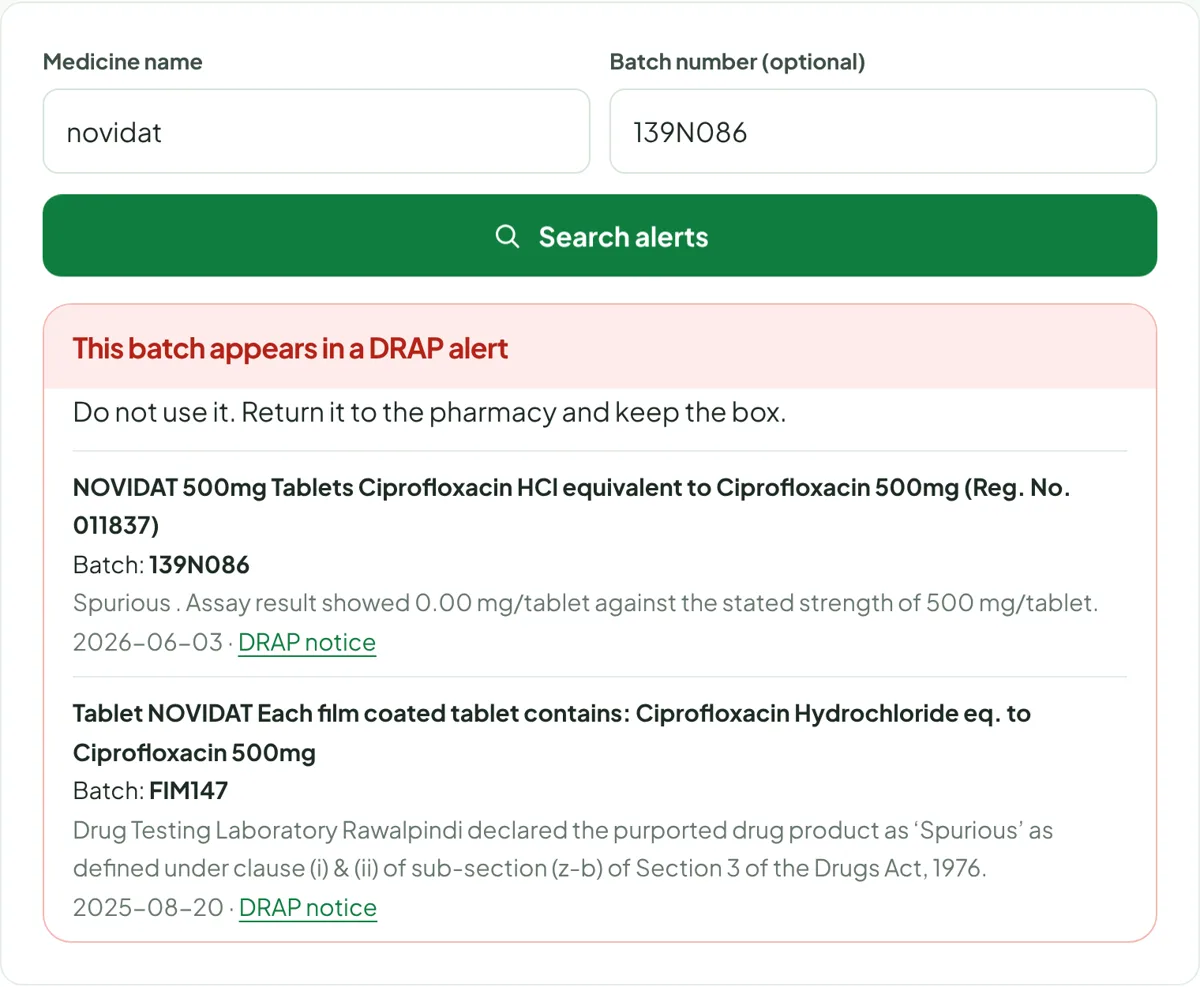
Batch numbers and full details are in each DRAP notice; search them in our recall tool. A named batch is the batch printed on the fakes; the genuine product with other batch numbers is not affected by a falsification alert.
Before an injection: five checks
- SourceHospital pharmacy, licensed pharmacy or recognised vaccination centre. Avoid injections offered by unlicensed sellers or brought from unknown suppliers.
- Cold chainVaccines, insulin and many biologicals must be kept at 2 to 8 °C. They should come out of a working fridge, not a shelf or a bag.
- Carton and sealA sealed carton with a leaflet, registration number, batch, expiry and, on new packs, a square code. The batch and expiry on the vial or syringe must match the carton.
- Scan and searchScan the code on the carton and search the batch in recall alerts.
- Look at the liquidIt should look as the leaflet describes: clear or evenly cloudy, with no particles, discolouration or cracks in the glass.
Warning signs on vials and syringes
| Sign | Why it matters |
|---|---|
| No carton, or a carton that looks photocopied | Genuine injectables come in printed cartons with a leaflet |
| Batch on the vial differs from the carton | Suggests repackaging |
| Label stuck on crookedly, poor print, spelling mistakes | Common on counterfeits |
| Loose or missing flip-off cap, damaged rubber stopper | Possible tampering or refilling |
| Particles, cloudiness, wrong colour | Contamination or a wrong product |
| Price far below normal, or "imported" with no Pakistani registration | A frequent lure |
Vaccinations for children
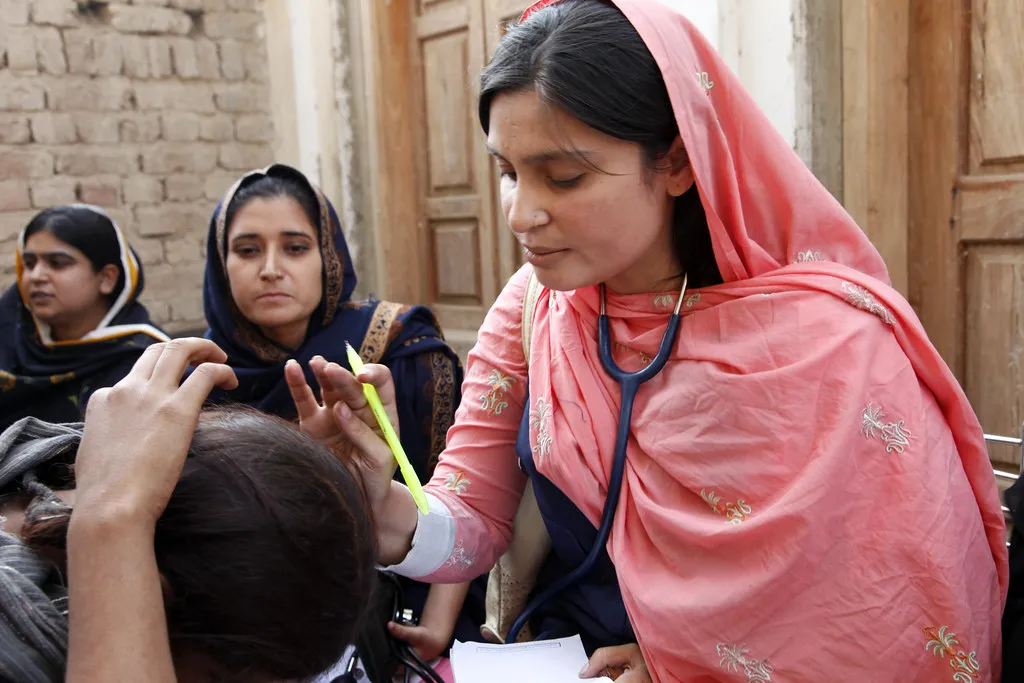
Routine childhood vaccines in Pakistan are given free through the government immunisation programme at designated health facilities, where they are supplied and stored through a controlled cold chain. For vaccines bought privately, such as influenza vaccines, use a hospital or clinic that stores them in a monitored fridge, and keep the vaccination card with the vaccine name and batch.
Cancer and specialist medicines
Families buying expensive cancer or specialist injections are especially exposed, because the products are costly, sometimes in short supply, and offered by intermediaries. Buy through the treating hospital's pharmacy or an authorised distributor, insist on an invoice with the batch number, and ask the oncology team to check the pack before it is given. DRAP's July 2026 alert named spurious and unregistered oncology products.
If you suspect a fake injection
- Do not use itKeep the vial, carton and receipt.
- Tell the clinic or doctorAsk for the product and batch if it was already given.
- Watch for reactionsFever, swelling, rash, breathing difficulty: seek care at once.
- Report itThrough DRAP's complaint form for the product, and the side-effect reporting system for any reaction.
Mukhtasar
Injection aur vaccine sirf licensed hospital, pharmacy ya vaccination center se lein jahan fridge mein rakhi jati ho. Dabba seal ho, batch aur expiry vial se milti ho, code scan karein aur batch recall alerts mein dekhein. Shak ho to istemal na karein aur report karein.
A worked example: buying an injection for a relative
A doctor asks Ahmed to buy an injection for his mother's treatment. The first shop he tries offers it at a large discount, takes it from a drawer, and the vial has no carton. He walks away. At the hospital pharmacy the injection comes out of the fridge in a sealed carton with a leaflet; the batch and expiry on the vial match the carton, the carton's square code scans as verified, and the batch is not in any DRAP alert. He keeps the receipt and shows the carton to the nurse before it is given. That is all it takes, and it removes most of the risk.
Insulin and home injections
People who inject at home, such as insulin users, face the same risks plus storage at home. Buy from a pharmacy that keeps stock in a fridge, check every new pen or vial, and follow our insulin storage guide. Dispose of needles safely as described in safe disposal.
Questions people ask
How can I tell if a vaccine is fake?
Patients usually cannot test a vaccine. Have it given at a recognised hospital, clinic or vaccination centre, check that the vial or pre-filled syringe comes from a sealed carton kept in a fridge, note the batch number, and check it against DRAP alerts. DRAP has issued alerts in 2026 about falsified influenza vaccines with named batch numbers.
Is it safe to buy injections from a medical store and take them to a clinic?
It can be, if the pharmacy is licensed, the injection was stored correctly (refrigerated where required) and the pack is sealed and in date. Ask for the carton, scan the code where present and check the batch in recall alerts before it is used.
Which injections have been faked in Pakistan?
DRAP alerts have named falsified or spurious anti-D immunoglobulin (Rhophylac), influenza vaccines (Influvac Tetra and Vaxigrip Tetra), and cancer medicines such as Darzalex, Imfinzi and Enhertu, among others. Search our recall tool by product name for the details and batch numbers.
What should I do if I think I received a fake injection?
Tell the doctor or clinic straight away and ask for the product name and batch number. Watch for reactions and seek care if you feel unwell. Report it to DRAP through its complaint form, and report any reaction through the side-effect reporting system.
Fake injection ki pehchan kaise karein?
Injection hamesha seal shuda dabbay mein, sahi darja-e-hararat par rakhi hui, licensed jagah se lein. Dabbay ka batch aur expiry vial se milayein, code scan karein aur batch number recall alerts mein dekhein.
Can a clinic reuse a syringe?
No. Disposable syringes are for single use. Auto-disable syringes are designed to lock after one use; DRAP has recalled batches that failed this test. If you see a syringe being reused, refuse the injection and report it.